
/** * HTTP API: WP_Http_Curl class * * @package WordPress * @subpackage HTTP * @since 4.4.0 */ /** * Core class used to integrate Curl as an HTTP transport. * * HTTP request method uses Curl extension to retrieve the url. * * Requires the Curl extension to be installed. * * @since 2.7.0 * @deprecated 6.4.0 Use WP_Http * @see WP_Http */ #[AllowDynamicProperties] class WP_Http_Curl { /** * Temporary header storage for during requests. * * @since 3.2.0 * @var string */ private $headers = ''; /** * Temporary body storage for during requests. * * @since 3.6.0 * @var string */ private $body = ''; /** * The maximum amount of data to receive from the remote server. * * @since 3.6.0 * @var int|false */ private $max_body_length = false; /** * The file resource used for streaming to file. * * @since 3.6.0 * @var resource|false */ private $stream_handle = false; /** * The total bytes written in the current request. * * @since 4.1.0 * @var int */ private $bytes_written_total = 0; /** * Send a HTTP request to a URI using cURL extension. * * @since 2.7.0 * * @param string $url The request URL. * @param string|array $args Optional. Override the defaults. * @return array|WP_Error Array containing 'headers', 'body', 'response', 'cookies', 'filename'. A WP_Error instance upon error */ public function request( $url, $args = array() ) { $defaults = array( 'method' => 'GET', 'timeout' => 5, 'redirection' => 5, 'httpversion' => '1.0', 'blocking' => true, 'headers' => array(), 'body' => null, 'cookies' => array(), 'decompress' => false, 'stream' => false, 'filename' => null, ); $parsed_args = wp_parse_args( $args, $defaults ); if ( isset( $parsed_args['headers']['User-Agent'] ) ) { $parsed_args['user-agent'] = $parsed_args['headers']['User-Agent']; unset( $parsed_args['headers']['User-Agent'] ); } elseif ( isset( $parsed_args['headers']['user-agent'] ) ) { $parsed_args['user-agent'] = $parsed_args['headers']['user-agent']; unset( $parsed_args['headers']['user-agent'] ); } // Construct Cookie: header if any cookies are set. WP_Http::buildCookieHeader( $parsed_args ); $handle = curl_init(); // cURL offers really easy proxy support. $proxy = new WP_HTTP_Proxy(); if ( $proxy->is_enabled() && $proxy->send_through_proxy( $url ) ) { curl_setopt( $handle, CURLOPT_PROXYTYPE, CURLPROXY_HTTP ); curl_setopt( $handle, CURLOPT_PROXY, $proxy->host() ); curl_setopt( $handle, CURLOPT_PROXYPORT, $proxy->port() ); if ( $proxy->use_authentication() ) { curl_setopt( $handle, CURLOPT_PROXYAUTH, CURLAUTH_ANY ); curl_setopt( $handle, CURLOPT_PROXYUSERPWD, $proxy->authentication() ); } } $is_local = isset( $parsed_args['local'] ) && $parsed_args['local']; $ssl_verify = isset( $parsed_args['sslverify'] ) && $parsed_args['sslverify']; if ( $is_local ) { /** This filter is documented in wp-includes/class-wp-http-streams.php */ $ssl_verify = apply_filters( 'https_local_ssl_verify', $ssl_verify, $url ); } elseif ( ! $is_local ) { /** This filter is documented in wp-includes/class-wp-http.php */ $ssl_verify = apply_filters( 'https_ssl_verify', $ssl_verify, $url ); } /* * CURLOPT_TIMEOUT and CURLOPT_CONNECTTIMEOUT expect integers. Have to use ceil since. * a value of 0 will allow an unlimited timeout. */ $timeout = (int) ceil( $parsed_args['timeout'] ); curl_setopt( $handle, CURLOPT_CONNECTTIMEOUT, $timeout ); curl_setopt( $handle, CURLOPT_TIMEOUT, $timeout ); curl_setopt( $handle, CURLOPT_URL, $url ); curl_setopt( $handle, CURLOPT_RETURNTRANSFER, true ); curl_setopt( $handle, CURLOPT_SSL_VERIFYHOST, ( true === $ssl_verify ) ? 2 : false ); curl_setopt( $handle, CURLOPT_SSL_VERIFYPEER, $ssl_verify ); if ( $ssl_verify ) { curl_setopt( $handle, CURLOPT_CAINFO, $parsed_args['sslcertificates'] ); } curl_setopt( $handle, CURLOPT_USERAGENT, $parsed_args['user-agent'] ); /* * The option doesn't work with safe mode or when open_basedir is set, and there's * a bug #17490 with redirected POST requests, so handle redirections outside Curl. */ curl_setopt( $handle, CURLOPT_FOLLOWLOCATION, false ); curl_setopt( $handle, CURLOPT_PROTOCOLS, CURLPROTO_HTTP | CURLPROTO_HTTPS ); switch ( $parsed_args['method'] ) { case 'HEAD': curl_setopt( $handle, CURLOPT_NOBODY, true ); break; case 'POST': curl_setopt( $handle, CURLOPT_POST, true ); curl_setopt( $handle, CURLOPT_POSTFIELDS, $parsed_args['body'] ); break; case 'PUT': curl_setopt( $handle, CURLOPT_CUSTOMREQUEST, 'PUT' ); curl_setopt( $handle, CURLOPT_POSTFIELDS, $parsed_args['body'] ); break; default: curl_setopt( $handle, CURLOPT_CUSTOMREQUEST, $parsed_args['method'] ); if ( ! is_null( $parsed_args['body'] ) ) { curl_setopt( $handle, CURLOPT_POSTFIELDS, $parsed_args['body'] ); } break; } if ( true === $parsed_args['blocking'] ) { curl_setopt( $handle, CURLOPT_HEADERFUNCTION, array( $this, 'stream_headers' ) ); curl_setopt( $handle, CURLOPT_WRITEFUNCTION, array( $this, 'stream_body' ) ); } curl_setopt( $handle, CURLOPT_HEADER, false ); if ( isset( $parsed_args['limit_response_size'] ) ) { $this->max_body_length = (int) $parsed_args['limit_response_size']; } else { $this->max_body_length = false; } // If streaming to a file open a file handle, and setup our curl streaming handler. if ( $parsed_args['stream'] ) { if ( ! WP_DEBUG ) { $this->stream_handle = @fopen( $parsed_args['filename'], 'w+' ); } else { $this->stream_handle = fopen( $parsed_args['filename'], 'w+' ); } if ( ! $this->stream_handle ) { return new WP_Error( 'http_request_failed', sprintf( /* translators: 1: fopen(), 2: File name. */ __( 'Could not open handle for %1$s to %2$s.' ), 'fopen()', $parsed_args['filename'] ) ); } } else { $this->stream_handle = false; } if ( ! empty( $parsed_args['headers'] ) ) { // cURL expects full header strings in each element. $headers = array(); foreach ( $parsed_args['headers'] as $name => $value ) { $headers[] = "{$name}: $value"; } curl_setopt( $handle, CURLOPT_HTTPHEADER, $headers ); } if ( '1.0' === $parsed_args['httpversion'] ) { curl_setopt( $handle, CURLOPT_HTTP_VERSION, CURL_HTTP_VERSION_1_0 ); } else { curl_setopt( $handle, CURLOPT_HTTP_VERSION, CURL_HTTP_VERSION_1_1 ); } /** * Fires before the cURL request is executed. * * Cookies are not currently handled by the HTTP API. This action allows * plugins to handle cookies themselves. * * @since 2.8.0 * * @param resource $handle The cURL handle returned by curl_init() (passed by reference). * @param array $parsed_args The HTTP request arguments. * @param string $url The request URL. */ do_action_ref_array( 'http_api_curl', array( &$handle, $parsed_args, $url ) ); // We don't need to return the body, so don't. Just execute request and return. if ( ! $parsed_args['blocking'] ) { curl_exec( $handle ); $curl_error = curl_error( $handle ); if ( $curl_error ) { if ( PHP_VERSION_ID < 80000 ) { // curl_close() has no effect as of PHP 8.0. curl_close( $handle ); } return new WP_Error( 'http_request_failed', $curl_error ); } if ( in_array( curl_getinfo( $handle, CURLINFO_HTTP_CODE ), array( 301, 302 ), true ) ) { if ( PHP_VERSION_ID < 80000 ) { // curl_close() has no effect as of PHP 8.0. curl_close( $handle ); } return new WP_Error( 'http_request_failed', __( 'Too many redirects.' ) ); } if ( PHP_VERSION_ID < 80000 ) { // curl_close() has no effect as of PHP 8.0. curl_close( $handle ); } return array( 'headers' => array(), 'body' => '', 'response' => array( 'code' => false, 'message' => false, ), 'cookies' => array(), ); } curl_exec( $handle ); $processed_headers = WP_Http::processHeaders( $this->headers, $url ); $body = $this->body; $bytes_written_total = $this->bytes_written_total; $this->headers = ''; $this->body = ''; $this->bytes_written_total = 0; $curl_error = curl_errno( $handle ); // If an error occurred, or, no response. if ( $curl_error || ( 0 === strlen( $body ) && empty( $processed_headers['headers'] ) ) ) { if ( CURLE_WRITE_ERROR /* 23 */ === $curl_error ) { if ( ! $this->max_body_length || $this->max_body_length !== $bytes_written_total ) { if ( $parsed_args['stream'] ) { if ( PHP_VERSION_ID < 80000 ) { // curl_close() has no effect as of PHP 8.0. curl_close( $handle ); } fclose( $this->stream_handle ); return new WP_Error( 'http_request_failed', __( 'Failed to write request to temporary file.' ) ); } else { if ( PHP_VERSION_ID < 80000 ) { // curl_close() has no effect as of PHP 8.0. curl_close( $handle ); } return new WP_Error( 'http_request_failed', curl_error( $handle ) ); } } } else { $curl_error = curl_error( $handle ); if ( $curl_error ) { if ( PHP_VERSION_ID < 80000 ) { // curl_close() has no effect as of PHP 8.0. curl_close( $handle ); } return new WP_Error( 'http_request_failed', $curl_error ); } } if ( in_array( curl_getinfo( $handle, CURLINFO_HTTP_CODE ), array( 301, 302 ), true ) ) { if ( PHP_VERSION_ID < 80000 ) { // curl_close() has no effect as of PHP 8.0. curl_close( $handle ); } return new WP_Error( 'http_request_failed', __( 'Too many redirects.' ) ); } } if ( PHP_VERSION_ID < 80000 ) { // curl_close() has no effect as of PHP 8.0. curl_close( $handle ); } if ( $parsed_args['stream'] ) { fclose( $this->stream_handle ); } $response = array( 'headers' => $processed_headers['headers'], 'body' => null, 'response' => $processed_headers['response'], 'cookies' => $processed_headers['cookies'], 'filename' => $parsed_args['filename'], ); // Handle redirects. $redirect_response = WP_Http::handle_redirects( $url, $parsed_args, $response ); if ( false !== $redirect_response ) { return $redirect_response; } if ( true === $parsed_args['decompress'] && true === WP_Http_Encoding::should_decode( $processed_headers['headers'] ) ) { $body = WP_Http_Encoding::decompress( $body ); } $response['body'] = $body; return $response; } /** * Grabs the headers of the cURL request. * * Each header is sent individually to this callback, and is appended to the `$header` property * for temporary storage. * * @since 3.2.0 * * @param resource $handle cURL handle. * @param string $headers cURL request headers. * @return int Length of the request headers. */ private function stream_headers( $handle, $headers ) { $this->headers .= $headers; return strlen( $headers ); } /** * Grabs the body of the cURL request. * * The contents of the document are passed in chunks, and are appended to the `$body` * property for temporary storage. Returning a length shorter than the length of * `$data` passed in will cause cURL to abort the request with `CURLE_WRITE_ERROR`. * * @since 3.6.0 * * @param resource $handle cURL handle. * @param string $data cURL request body. * @return int Total bytes of data written. */ private function stream_body( $handle, $data ) { $data_length = strlen( $data ); if ( $this->max_body_length && ( $this->bytes_written_total + $data_length ) > $this->max_body_length ) { $data_length = ( $this->max_body_length - $this->bytes_written_total ); $data = substr( $data, 0, $data_length ); } if ( $this->stream_handle ) { $bytes_written = fwrite( $this->stream_handle, $data ); } else { $this->body .= $data; $bytes_written = $data_length; } $this->bytes_written_total += $bytes_written; // Upon event of this function returning less than strlen( $data ) curl will error with CURLE_WRITE_ERROR. return $bytes_written; } /** * Determines whether this class can be used for retrieving a URL. * * @since 2.7.0 * * @param array $args Optional. Array of request arguments. Default empty array. * @return bool False means this class can not be used, true means it can. */ public static function test( $args = array() ) { if ( ! function_exists( 'curl_init' ) || ! function_exists( 'curl_exec' ) ) { return false; } $is_ssl = isset( $args['ssl'] ) && $args['ssl']; if ( $is_ssl ) { $curl_version = curl_version(); // Check whether this cURL version support SSL requests. if ( ! ( CURL_VERSION_SSL & $curl_version['features'] ) ) { return false; } } /** * Filters whether cURL can be used as a transport for retrieving a URL. * * @since 2.7.0 * * @param bool $use_class Whether the class can be used. Default true. * @param array $args An array of request arguments. */ return apply_filters( 'use_curl_transport', true, $args ); } } Descubre el Atrapaníquel Juego de Azar del Chicken Road en España – Shweta Poddar Weddings Photography

En el mundo de los juegos de azar en línea, el Chicken Road se ha convertido en un nombre muy conocido en España. Sin embargo, detrás de su fachada de entretenimiento y diversión, existe un riesgo oculto que muchos jugadores no están preparados para enfrentar. En este artículo, exploraremos los problemas de seguridad y confiabilidad que rodean al Chicken Road en España, y cómo identificar las señales de un fraude en línea.

¿Cuál es el Riesgo Oculto de Jugar en Línea?

El Chicken Road es una aplicación de juego en línea que ofrece una variedad de juegos de azar, incluyendo tragamonedas, ruletas y juegos de mesa. Aunque parece ser una opción divertida y emocionante para los jugadores, hay algunas señales de advertencia que debes tener en cuenta antes de jugar. En primer lugar, es importante investigar sobre la plataforma y su reputación en línea. ¿Es seguro jugar en la aplicación? ¿Hay informes de fraude o estafas asociadas con el Chicken Road?

Según Aquí, una plataforma de seguridad en línea, es esencial investigar sobre la reputación de cualquier plataforma de juego en línea antes de depositar dinero o compartir información personal. Algunas señales de advertencia incluyen:

Señal de advertencia Descripción
Licencia y regulación ¿La plataforma tiene una licencia y regulación válida?
Reputación en línea ¿Hay informes de fraude o estafas asociados con la plataforma?
Seguridad de datos ¿La plataforma tiene medidas de seguridad adecuadas para proteger tus datos personales?

Problemas de Identidad y Seguridad en la Aplicación

Una vez que hayas investigado sobre la reputación de la plataforma, es importante considerar los problemas de identidad y seguridad en la aplicación. ¿Es el Chicken Road una aplicación confiable para España? ¿Cómo proteger tus datos personales en la plataforma del Chicken Road? Algunas preguntas que debes hacer incluyen:

¿La aplicación tiene medidas de seguridad adecuadas para proteger tus datos personales? ¿Hay una política de privacidad clara y transparente? * ¿La plataforma ofrece opciones de pago seguras y confiables?

Recompensas y Promociones: ¿Es Fácil Ganar Dinero?
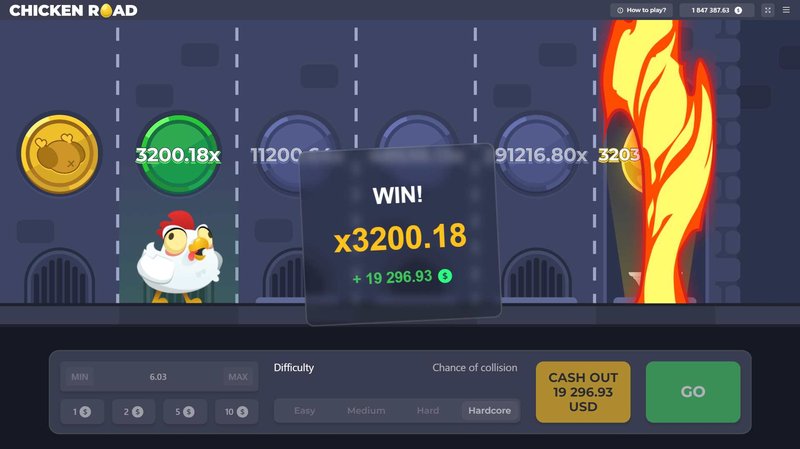
Spain - chicken road casino

Las recompensas y promociones pueden ser tentadoras, pero es importante recordar que no hay forma garantizada de ganar dinero en los juegos de azar. La verdad detrás de las recompensas y promociones de la aplicación es que pueden ser engañosas y diseñadas para mantener a los jugadores jugando. Algunas estrategias para evitar caer en trampas incluyen:

Establecer un presupuesto y mantenerse a él No jugar con dinero que no se puede perder * No caer en la tentación de jugar por ganar dinero

La Dependencia: ¿Estás en Peligro de Caer en un Ciclo de Juego Excesivo?

La dependencia es un problema común en los juegos de azar en línea, y es importante identificar los signos de dependencia en ti mismo o en alguien que conoces. Algunos signos de dependencia incluyen:

Jugar cada vez más a menudo o durante períodos más largos Sentirse ansioso o deprimido cuando no se puede jugar * Negar o minimizar el problema de la dependencia

Soluciones y Recursos para Jugar de Forma Responsable

Si te sientes que has caído en un ciclo de juego excesivo, es importante buscar ayuda. Algunos recursos y consejos para jugar de forma responsable incluyen:

Establecer límites y metas realistas Buscar apoyo de amigos y familiares * Considerar la posibilidad de un programa de tratamiento para la adicción al juego

Chicken Road